

Development journal · Learning studies ·
Learning what makes
a character move.
Building the green knight uncovered a gap: making a character look right was one challenge. Understanding how to rig it was another. A separate human-body experiment became a way to learn.
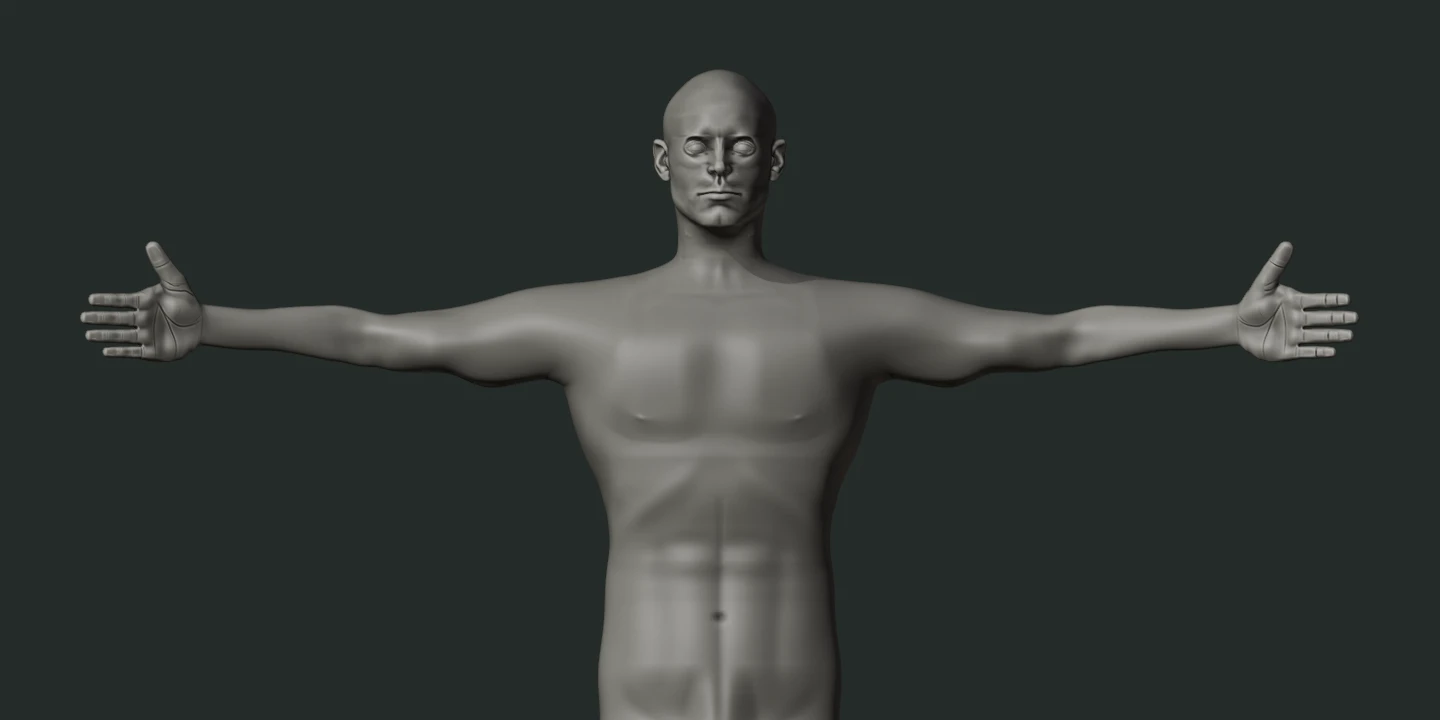
The detour behind the knight.
The experiment began while working on the green knight. Rigging was no longer something that could be treated as a finishing step: the body underneath needed to make sense when it moved.
Stepping away from the armour made room to work on that problem directly. A base human model offered a simpler place to explore construction, joints and deformation without trying to solve every part of the knight at once.
An image was only a starting point.
An AI-generated 2D reference helped establish a visual starting point, followed by a Tripo3D trial. But a promising-looking surface was not the same thing as a body that could be articulated reliably. Defects became much clearer when the model had to bend.
The work moved into hands-on construction and rebuilding in Blender: shaping parts piece by piece, working out how they should connect, and revisiting them when movement exposed a problem. The hands became a particularly detailed exercise in building the form rather than accepting what had been generated.
A pose changes the question.
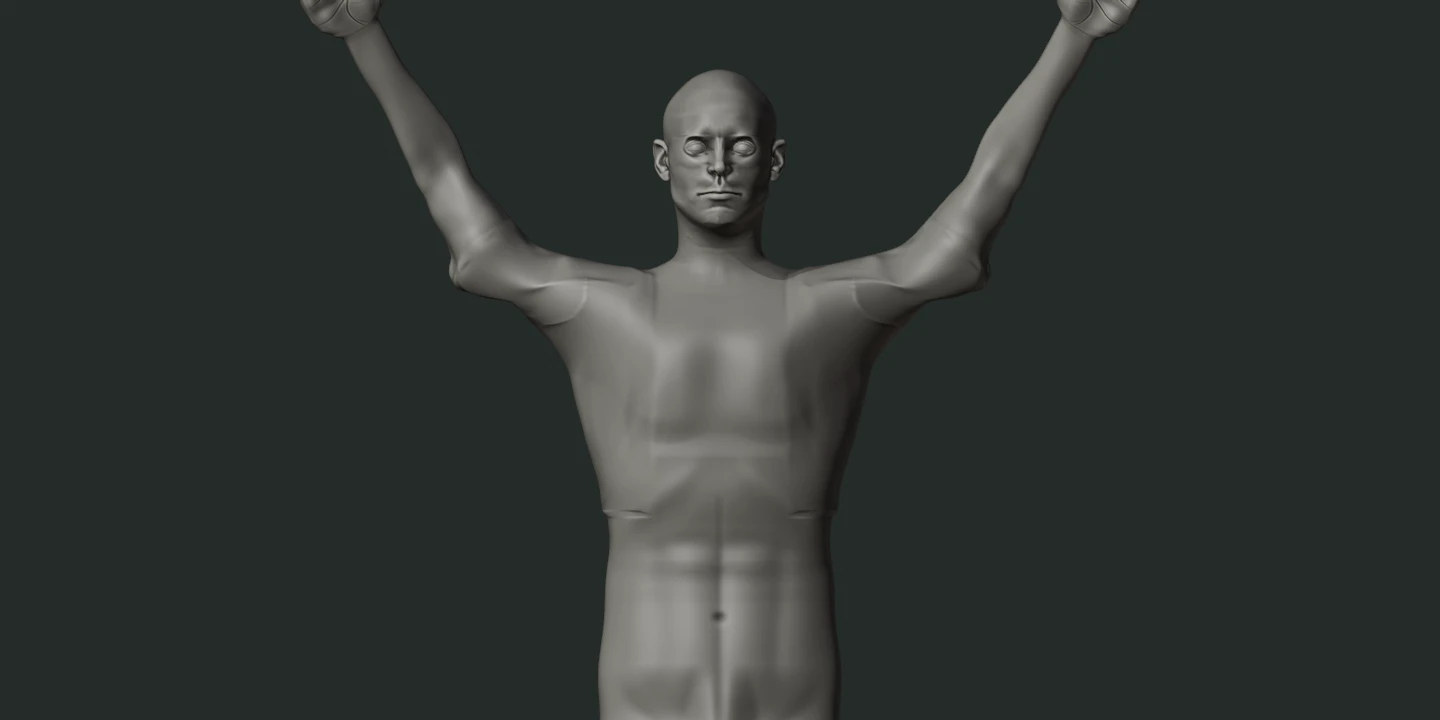
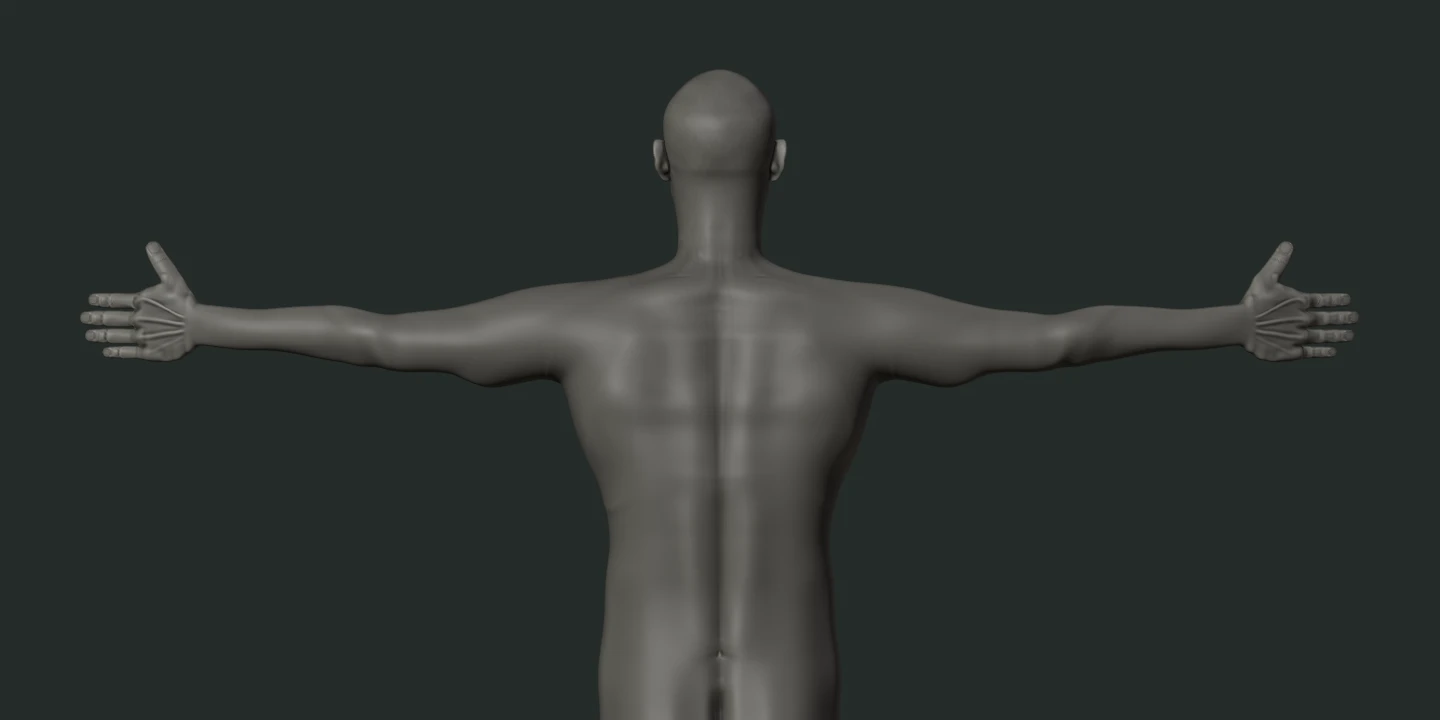
Rigify introduced another layer to learn: fitting a rig, understanding its controls, and seeing how the skin followed them. A shape that seemed convincing with the arms extended could look quite different once they were lowered or raised.
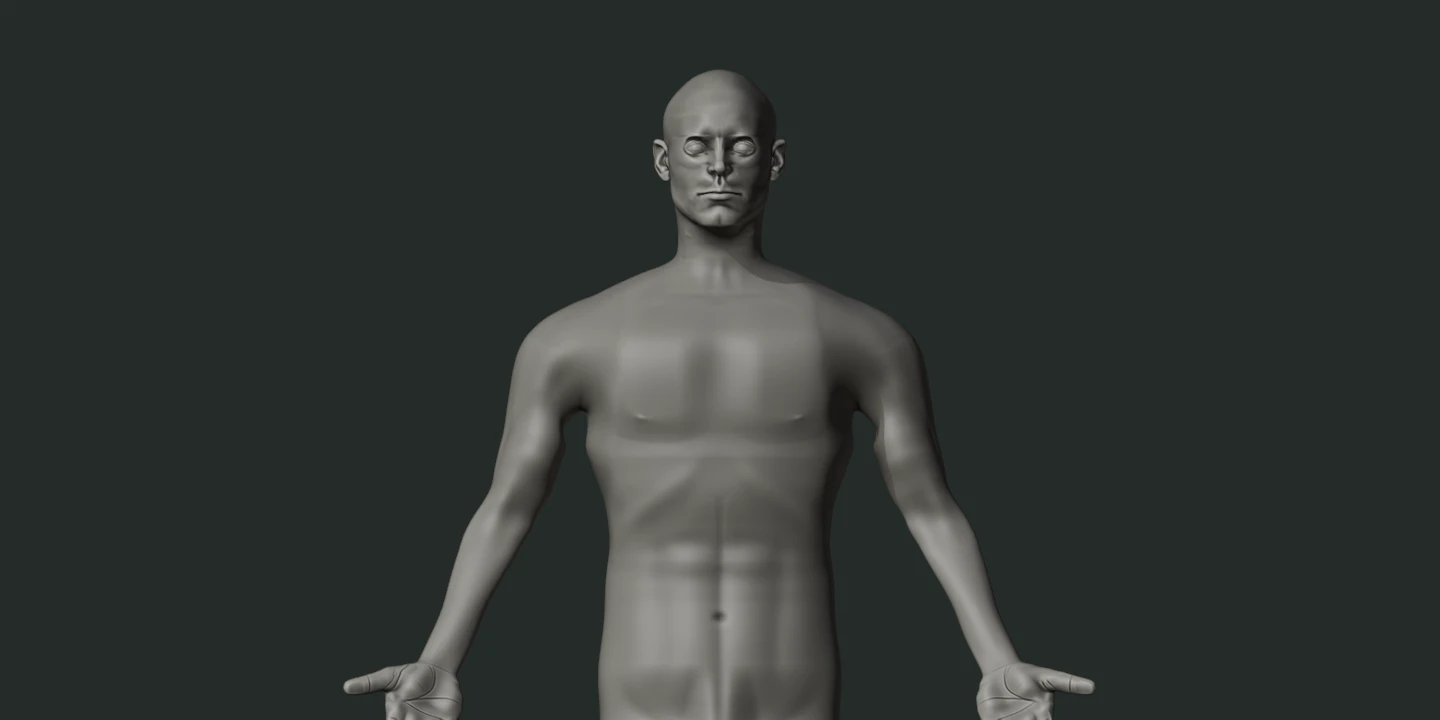
The thumb was not just another finger.
The hands made that lesson especially clear. Getting fingers to bend did not mean the thumb would behave convincingly. Its movement across the palm, the shape at its base and its relationship to the other fingers needed separate attention.
That meant returning to individual movements, looking at real hands and asking whether the result actually looked right. A control reaching its target was not enough if the surrounding skin folded or stretched in an implausible way.
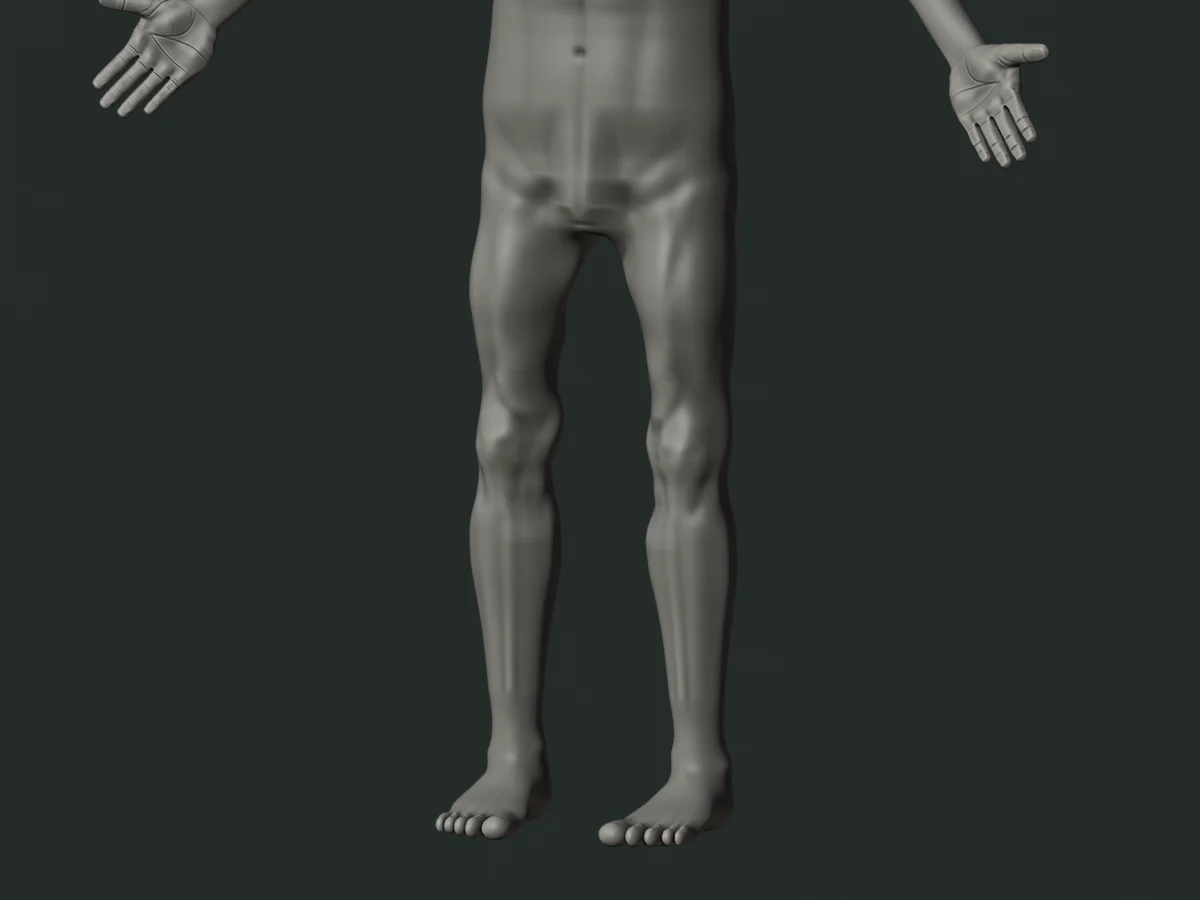
The legs were no easier.
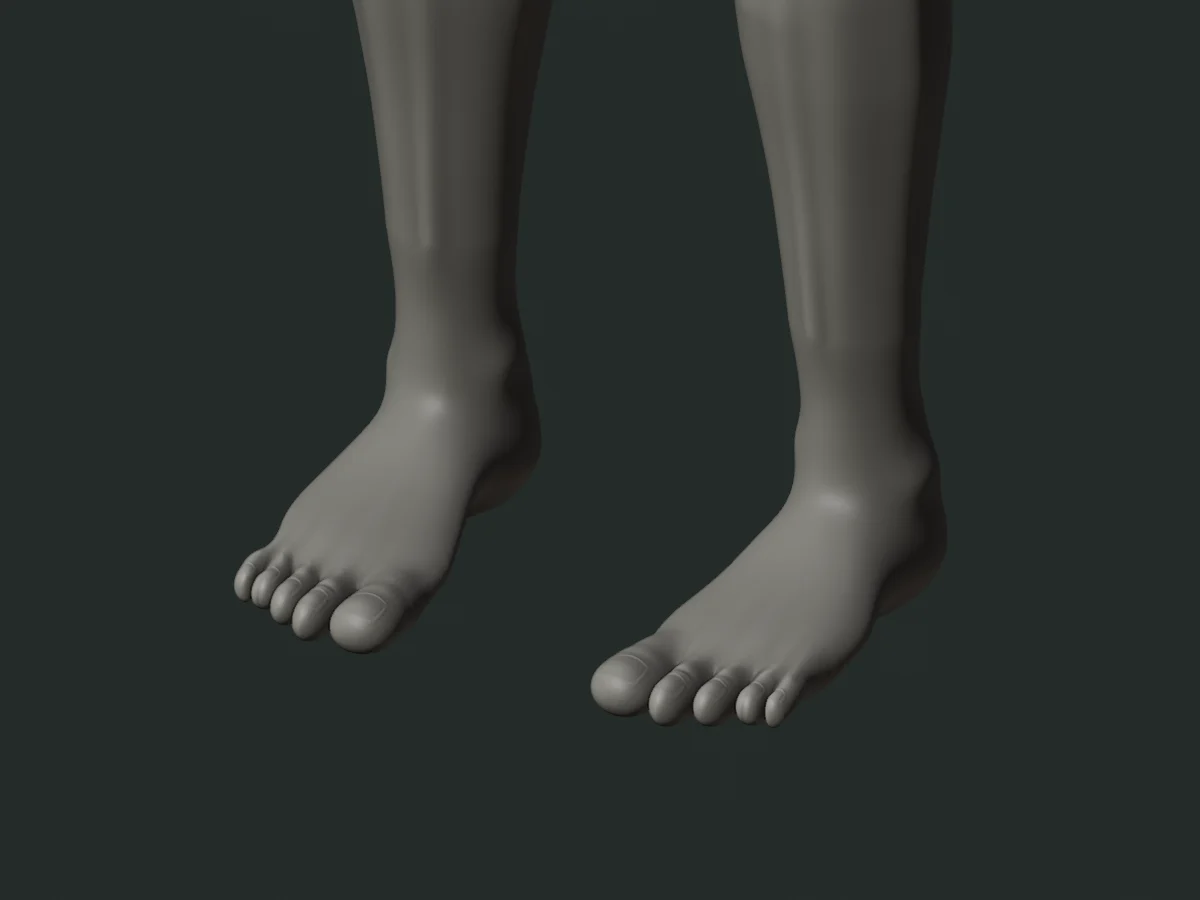
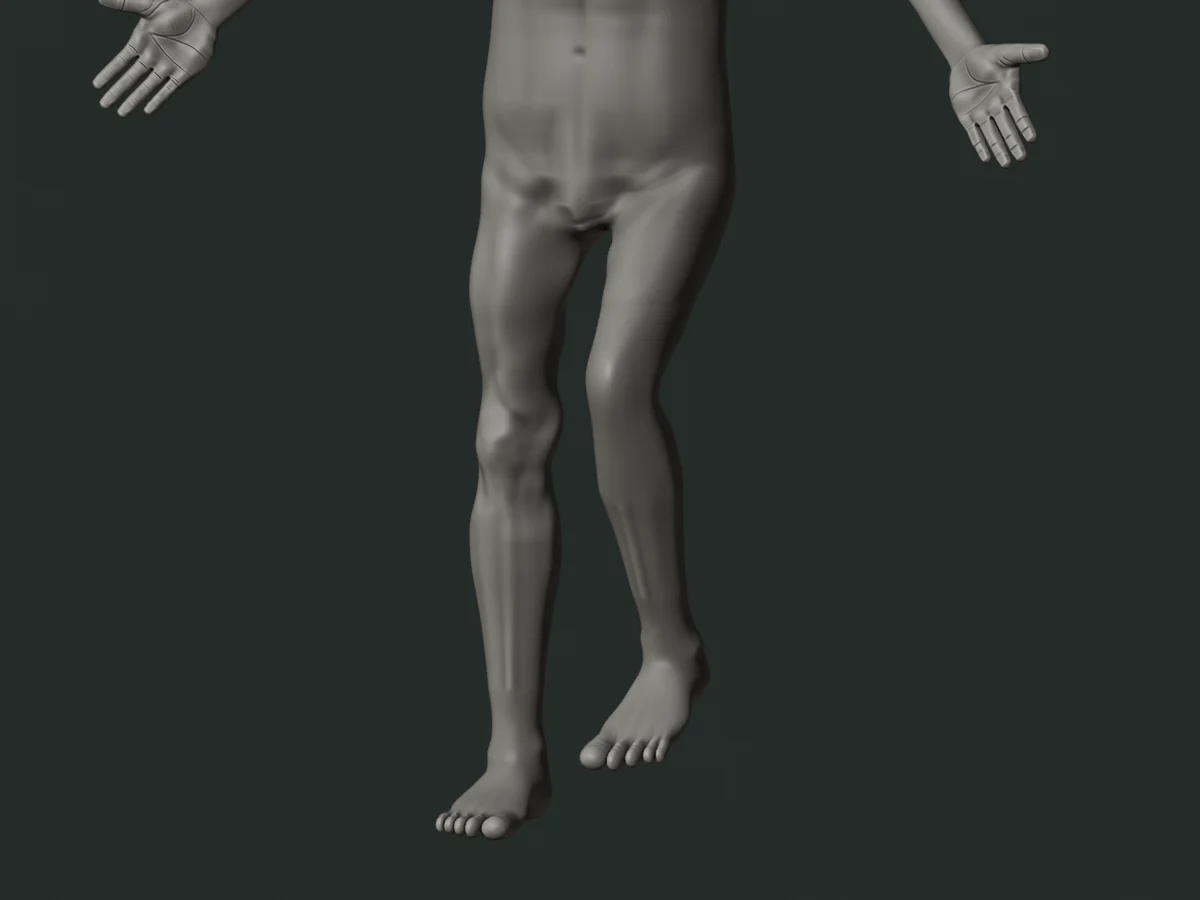
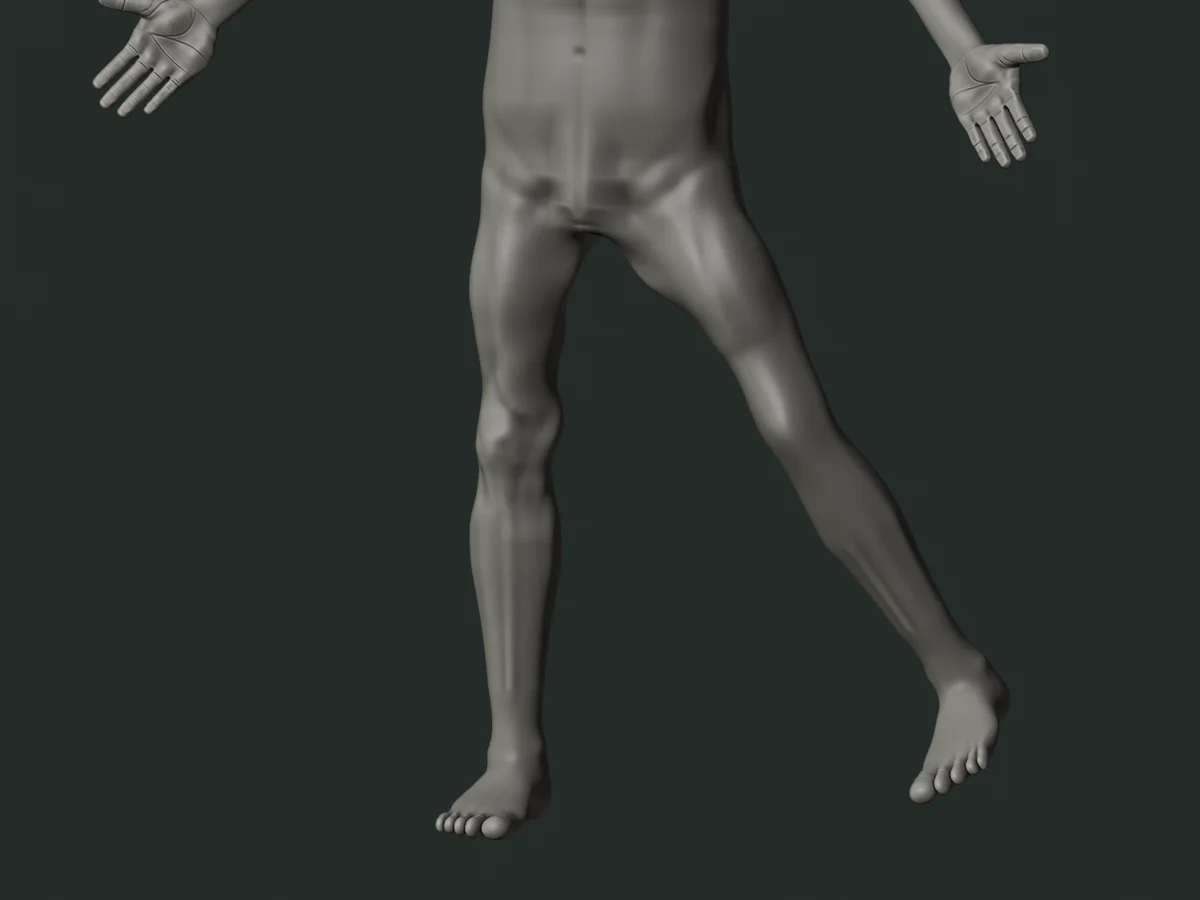
Making convincing legs proved just as difficult as building the hands—and learning to rig them was another challenge again. The upper legs and the area around the groin were particularly troublesome. Movement repeatedly pulled the model into awkward shapes, exposing problems that were much less obvious when it stood still.
Smoothing those areas could introduce strange-looking results of its own. It took repeated adjustments, pose tests and plenty of trial and error to get the shape and movement working together. Eventually the legs moved and looked reasonable: not a perfect result, but a hard-earned improvement, and another reminder that a body has to be judged in motion as well as at rest.
Learning from working examples.
Studying existing Blender character models and rigs helped make some of the problems less abstract. Shoulders were a good example: looking at how another model handled rotation and deformation gave something concrete to compare against.
The aim was to understand the decisions behind a working setup—where movement came from, how it travelled through the body, and where corrective work was needed—then apply that understanding to this experiment.
A learning model, not a finished asset.
This is not presented as a polished human model or an anatomical reference. There are still awkward forms and unfinished areas. It is a record of learning to build and rig something, finding the limits of an approach, and going back to understand why it failed.
That work belongs behind Stormwrought as much as the more recognisable knight artwork. The useful result is not only the model itself, but a better understanding of what to look for when a shoulder collapses, a thumb moves strangely or a surface does not follow the rig as expected.
About the images. Fresh Blender captures of the saved base-male rigging experiment, using a neutral studio display. They show the actual model rather than generated illustrations. Early exploration included AI-generated reference imagery and a Tripo3D trial; the article distinguishes those stages from the subsequent Blender construction and rigging work.